Taking your dog on holiday for the first time is genuinely different from every trip that follows, and not only because you don’t yet know what your particular dog needs to feel settled somewhere unfamiliar, but because almost everything feels like a variable you haven’t accounted for yet. The preparation that actually matters, and this catches most first-timers off guard, is mostly about the property and the car journey, not the packing list.
Table of Contents
The Mistake Most People Make When Taking Your Dog on Holiday for the First Time
When taking your dog on holiday for the first time, the most common mistake isn’t the packing: it’s booking somewhere that advertises as dog-friendly without establishing what that actually means in practice. At a minimum, the phrase means the property allows dogs. It doesn’t necessarily mean a fenced garden, permission to leave dogs unattended, ground-floor access, tolerance of more than one dog, or any particular attitude toward larger or commonly excluded breeds.
Before booking, check or ask directly: Is the garden fully enclosed, and what’s the fence height? How many dogs does the property accept? Are large breeds or specific breeds excluded? Can dogs be left alone, and for how long? Is there anywhere to wash muddy paws before they come inside?
These questions feel fussy before your first trip, and completely natural after your second, once you’ve experienced the garden that claimed to be enclosed up to the hedge line but not the ditch running alongside it.
The BowWow Score on BWW listings rates properties on these criteria on a scale of 0 to 100, so rather than reading through 40 lines of small print hoping the relevant detail is in there somewhere, you can compare at a glance how genuinely dog-friendly a place is. Some hosts score highly because they’ve thought about what a dog actually needs. Others score low because they’ve added a blanket ban on furniture and called themselves dog-friendly.
Pet fee or pet deposit? One thing worth establishing before you book is which you’re paying. A pet fee is non-refundable, added to the booking cost regardless of how well-behaved your dog is. A pet deposit is held against damage and returned if the property is left in good condition. Some cottages charge both, which is fair enough if they’re transparent about it. If you’d rather avoid the fee side of things entirely, the dog-friendly cottages with no pet fee filter on BWW will narrow the search.
Before You Travel
ID Tags and the Legal Requirement
Under the Control of Dogs Order 1992, every dog in a public place in England, Scotland and Wales must wear a collar with an ID tag showing the owner’s name and address. Before you travel, update the tag to include your mobile number and, if you have time, the address you’re staying at. If your dog goes missing in an unfamiliar place and the tag gives your home address, you’ve made an already stressful situation considerably harder.
Microchipping has been compulsory for all dogs in England, Scotland and Wales since April 2016, but the database is only useful if your contact details are current, so check them before you travel. The GOV.UK microchipping guidance covers which databases are approved and how to update your records.
The Car Journey
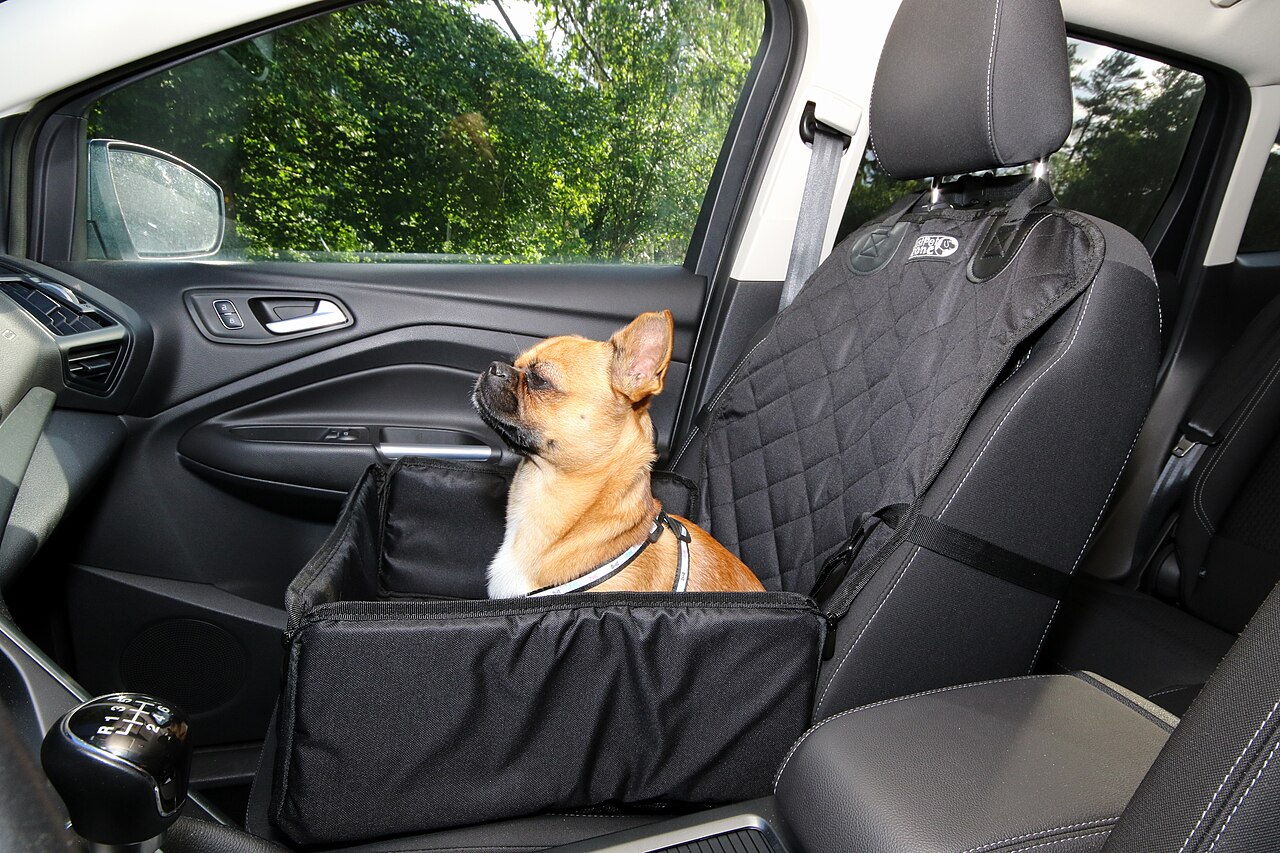
Highway Code Rule 57 requires dogs to be safely restrained in any vehicle, which in practice means a secured crate, a boot guard with the dog behind it, or a harness attached to a seatbelt. An unrestrained dog in the back seat is a legal risk and a genuinely dangerous one in a sudden stop. For a dog that has never made a long car journey, a few practice runs in the weeks before the holiday helps considerably, gradually increasing the distance so the experience isn’t entirely novel and overwhelming on the day itself.
For dogs with real car anxiety, the kind that doesn’t improve with acclimatisation, a vet can prescribe appropriate medication. It’s worth raising this at a routine appointment rather than discovering the severity of the problem two hours into a four-hour drive to the Cornish coast.
On the day: no food for two hours before you leave to reduce the car sickness risk, water available but not excessive, and a stop every 90 minutes or so if the journey is a long one. Something familiar in the travel space makes a difference, whether that’s their lead, their usual blanket, or a toy they know.
Vet Considerations
For a domestic UK holiday, there’s no compulsory vet paperwork. It’s worth confirming flea and tick treatments are up to date, particularly if you’re heading somewhere with ground-level wildlife or livestock nearby. The RSPCA’s holiday advice covers what to consider before travelling with dogs, including guidance on anxiety and settling in unfamiliar environments.
For travel to Ireland, Northern Ireland, or the Channel Islands, different rules apply, and some treatments must be given within a specific window before re-entry, so check government guidance at least four weeks before you travel rather than the week before.
Arriving and Settling In
One thing that taking your dog on holiday for the first time teaches you, faster than any preparation does, is that your dog’s reaction to an unfamiliar place is its own thing, separate from how confident or anxious they are at home. A dog that is completely relaxed at home may be unsettled for the first 24 to 48 hours in a new place. This is entirely normal and catches first-timers off guard, particularly if the dog seems anxious or subdued when you expected them to be enthusiastic about the new smells and the interesting garden.
Bringing their actual bed helps more than a travel version, because the familiar smell provides a reference point in an otherwise unfamiliar space. A worn t-shirt or a blanket from home in their sleeping area reinforces it. Sticking to their usual feeding and walk times gives the day a structure they recognise. Try not to leave them alone in the property for the first few hours even if the listing permits it, because a first night of full confidence is worth more to the rest of the trip than an afternoon of freedom to you.
Before you let them run in the garden, do a perimeter check yourself, running the fence line and looking for gaps a determined dog could push through, even if the listing says it’s fully enclosed. A gap you’d walk past is exactly the gap a motivated Beagle finds on their first afternoon.
Navigating Dog-Friendly Spaces

Beaches
Most UK beaches operate some form of seasonal dog restriction, and the most common pattern is a ban from the main beach area between 1 May and 30 September, with dogs permitted before 9am and after 6pm during those months, or restricted to a designated section. This isn’t universal, because some beaches are year-round with no restrictions at all and others have slightly different date ranges, but it’s safer to assume restrictions are in place and verify for the specific beach before you drive forty minutes to find a warden waiting.
The BWW guide to dog-friendly beaches in Cornwall covers the seasonal rules beach by beach, which is more reliable than reading a general “Cornwall beaches” article that quotes the same rules for twelve different places without checking each one.
Pubs
“Dogs welcome” in a pub context covers a wide range, from “dogs are permitted in the beer garden when the weather holds” all the way to “your dog can sit under the table by the fire while you eat a full Sunday lunch.” On a wet October afternoon in the Lake District, the difference between those two things is significant. When you’re checking a pub in advance, the most useful question is whether dogs are welcome at tables inside the building, not only in covered outdoor space.
More cafes are dog-friendly than their door signs suggest. If there’s outdoor seating and no explicit prohibition posted, it’s almost always worth asking, and many will produce a water bowl without being prompted.
A Few Things That Catch First-Timers Out
Size and breed restrictions: Some properties exclude large breeds or specific breeds, typically Staffordshire Bull Terriers, American Bulldogs, or Rottweilers, and this tends to appear only in the fine print of the booking terms. If you have a larger dog or a breed that commonly appears on exclusion lists, check before booking rather than after the cancellation window.
The extra day problem: Many dog owners add an extra night to their holiday to allow for the settling-in period, particularly on a first trip, and a four-night booking often feels like three days of actual holiday when the first half-day is spent getting the dog comfortable. It’s not a complaint, just a thing to factor in.
Cats and other pets: If you’re travelling with a cat, a rabbit, or anything else that doesn’t have an obvious place in a “dog-friendly” search, the same principles apply for the property side of things: enclosed garden, no busy road immediately outside, permission to bring them at all. BWW is primarily a dog travel resource, but many of the same questions about genuine welcome versus grudging tolerance apply across species.
FAQ
Do I need anything from my vet before a UK dog holiday?
For domestic UK travel, no paperwork is required. It’s sensible to check that flea and tick treatments are current, particularly in areas with livestock or ground-level wildlife. For travel to Ireland, Northern Ireland, or the Channel Islands, different rules apply and some treatments must be given within a specific time window before re-entry, so allow at least four weeks and check official guidance rather than general travel articles.
Can I leave my dog alone in a holiday cottage?
It depends entirely on the property. Many dog-friendly cottages do not permit dogs to be left unattended, either for welfare reasons or to protect against damage. The booking terms will usually say. If they don’t, ask directly before you book. For a first holiday, leaving them alone too early is generally a bad idea regardless of what the terms permit.
What if the garden isn’t as enclosed as the listing described?
It happens more than listings suggest. Check the perimeter yourself before you let the dog off the lead, regardless of what the listing says. If there’s a genuine gap or hazard that wasn’t disclosed, contact the host, who will usually have a workaround and will want to know so they can fix it. A long line in your kit means you’re not entirely dependent on the garden being exactly what it was described as.
What should I actually look for in a dog-friendly property?
Beyond “dogs allowed”: a fully enclosed garden, clarity on maximum numbers, ground-floor access or information about internal stairs, and the policy on leaving dogs unattended. The BowWow Score on BWW listings rates properties on these exact criteria, so you’re not piecing together the answer from scattered bullet points in a long listing description.