The Peak District is one of the easiest national parks to drive to from most of northern England and the Midlands, which is part of the appeal. The downside is that off-lead walks Peak District ramblers actually want are trickier to find here than in gentler national parks: open moorland, extensive grouse moors, and sheep on almost every hillside. Add the legal requirement to keep dogs on a two-metre lead on Open Access land between 1 March and 31 July, and you'd be forgiven for thinking the whole park is effectively off-limits for unclipped dogs.
It isn't. The Peak District has gritstone edges, enclosed woodlands, and moorland paths where off-lead walking is entirely realistic for dogs with decent recall. You just need to know which parts of the park actually deliver it, and this guide rounds up the off-lead walks Peak District locals actually rely on.
Table of Contents
Off-Lead Walks Peak District: The Edges With Room to Breathe
The Peak District's gritstone edges are among the best-known walking terrain in England. Long, elevated ridgelines above the Derwent valley, they offer views across the whole region and, crucially, areas of open moorland where livestock is absent.
Stanage Edge
Stanage is a serious ridge: almost four miles of gritstone escarpment running north to south above the Hope Valley, with a level path along the top that allows dogs to move freely across open heather and gritstone without the livestock complication that makes everywhere else difficult. The wide, flat path makes it practical even with a long line if recall isn't fully reliable.
The most popular start for these off-lead walks Peak District ramblers favour is the Hooks Car car park near Hathersage, which puts you onto the edge within ten minutes of leaving the car. The ridge itself is largely clear of sheep grazing, though the fields at the base on both sides are farmland and leads go back on for the descent. Early mornings and midweek visits make a real difference here: Stanage is popular with climbers, walkers, and both groups do better when dogs aren't competing for space.
Baslow Edge, Curbar Edge, and Froggatt Edge
These three edges connect to form a continuous elevated circuit above the Derwent valley, with Baslow and Curbar particularly good for off-lead walking across open moorland, arguably the pick of the off-lead walks Peak District offers above the Derwent. The classic approach from Curbar village follows the edge path south through heather, crossing Baslow Edge and dropping back via Wellington's Monument and the Eagle Stone, a roughly 6-mile circuit with a long off-lead stretch along the top.
Unlike Stanage Edge to the north, the descent routes here pass through a mix of woodland and open ground before hitting farmland, so you're leashing up well before the bottom. Heather blooms in late August and turns the moorland purple, which is either a spectacular backdrop or irrelevant depending on your dog's priorities (ours always went for the puddles rather than the views). Late summer is when this stretch turns into one of the better off-lead walks Peak District has to offer.
The full 11-mile route connecting Froggatt Edge, Curbar Edge, and Baslow Edge from Baslow village is worth it for dogs who need serious mileage. It follows the River Derwent out via the Derwent Valley Heritage Way before ascending to the edges, making it a proper day rather than a quick walk.
The Great Ridge: Mam Tor to Lose Hill
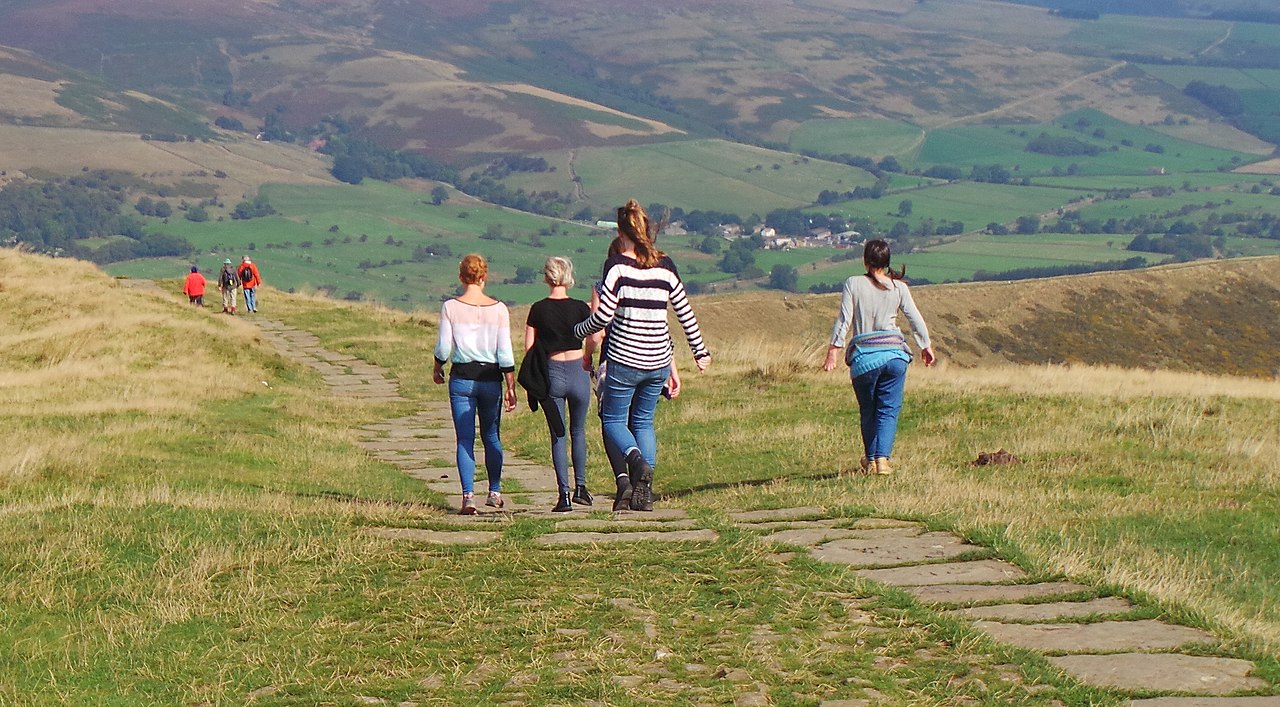
A few words of warning first, then the reason why this one's worth the effort.
Mam Tor sits above Castleton in the Dark Peak, and the classic circular from the village covers the great ridge northeast to Lose Hill, descends through Cave Dale, and loops back. It's 8 miles and around 1,200 feet of ascent. On the ridge itself, between Hollins Cross and Lose Hill, dogs can generally be off-lead: the path is wide and the ground is open moorland, and it's consistently ranked among the best off-lead walks Peak District ridge routes provide. The National Trust notes that dogs can often be off-lead on the ridge, with the caveat about the lower slopes near Castleton where sheep graze unfenced.
The lower slopes approaching Castleton from Cave Dale have livestock, and the Mam Tor summit car park area requires leads. But the ridge section, from Hollins Cross to Lose Hill, is the payoff for the climb, and it's one of those walks that rewards a dog with a working nose as much as it rewards the walker with the views.
One practical note on these off-lead walks Peak District weather can turn against you fast: the ridge catches wind hard on exposed days. Fine for a husky or a Labrador, worth thinking about if you've got a Whippet or a Chihuahua.
Woodlands and Reservoirs
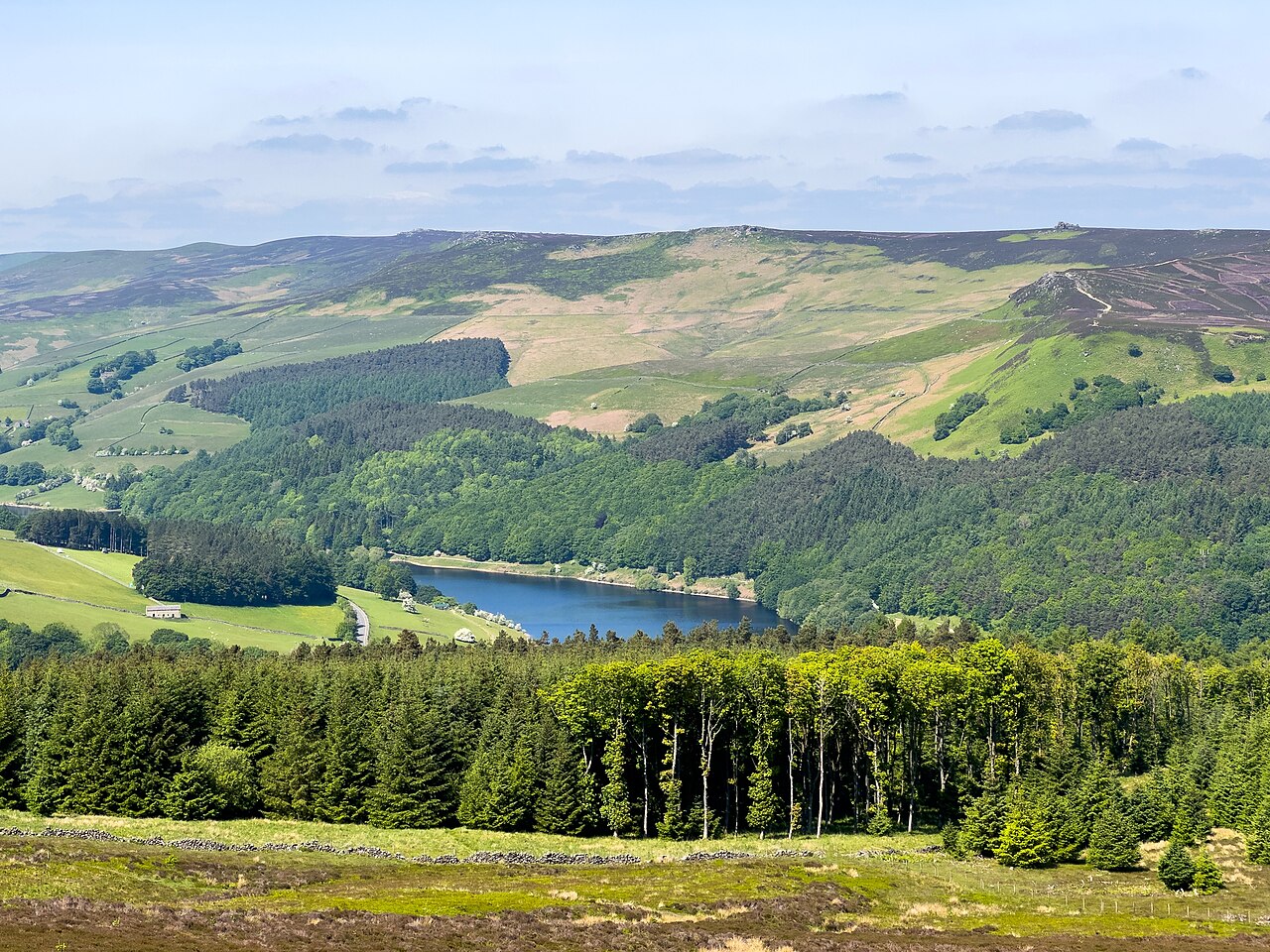
Linacre Reservoirs
Three linked reservoirs tucked into woodland west of Chesterfield, and one of the most consistently off-lead walks in the Peak District area. The 5-mile circular loops through woodland above the reservoirs and returns along the lower shores. Sheep are not part of this landscape, the paths are well maintained and waymarked, and the woodland cover makes it work on days when the edges are being battered.
It's less dramatic than the gritstone scenery further west, but for an after-work walk, or one of the gentler off-lead walks Peak District first-timers should try with a dog who doesn't yet have reliable recall around livestock, Linacre is close to perfect. The car park near Birley Farm fills on weekends.
Derwent Reservoir and the Upper Derwent Valley
The National Trust notes that dogs must be kept on leads near farm animals around the upper Derwent Valley, but the woodland above Ladybower and the 2,000-plus acres of plantation provide substantial off-lead territory where the livestock restriction doesn't apply. The 7-mile Derwent Dam circular from Fairholmes car park passes through woodland for much of the route, making it one of the more reliable off-lead walks Peak District weather rarely spoils.
The Fairholmes visitor centre has a cafe and is used to dogs arriving from the trails. The car park fills early on sunny weekends in summer, so aim for a 9am arrival if you're going on a Saturday.
Stanton Moor and the Nine Ladies
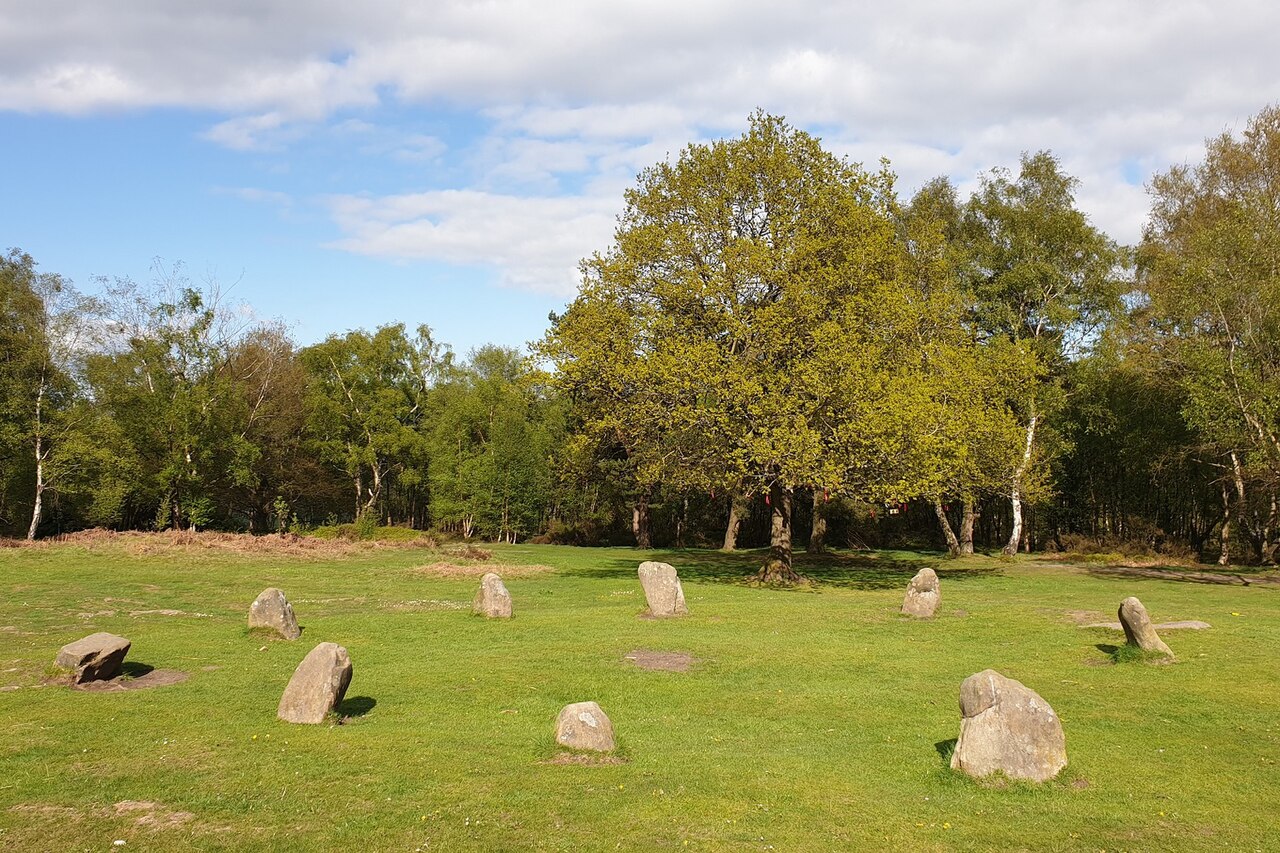
A quieter option, and a good one. Stanton Moor is a heather-covered plateau southeast of Bakewell, criss-crossed by paths and home to the Nine Ladies stone circle at its centre. The moor is enclosed and the paths are straightforward, meaning dogs can cover the plateau off-lead without the sheep concern that applies to the open fell further north, another entry on the list of dependable off-lead walks Peak District visitors overlook.
The stone circle itself is a natural destination for dogs who enjoy sniffing ancient things, and the surrounding heather makes for good poking-about territory on a dry day. The walk is a few miles at most, which makes it useful as a morning walk from a Bakewell base rather than a full day out, and one of the shorter off-lead walks Peak District has for an easy start to the day.
The Seasonal Lead Rule: What It Actually Means
Under the Countryside and Rights of Way Act (CROW), dogs must be kept on a lead of no more than 2 metres on all Open Access land between 1 March and 31 July, and at all times when near livestock. Ground-nesting bird season runs from March to July, and the High Peak moorland is particularly sensitive during this period.
This doesn't close the Peak District to off-lead walking. It means that the edges and moorland paths in this guide require leads from March to the end of July, while woodland and reservoir walks where livestock is absent (Linacre, sections of the upper Derwent woodland, Stanton Moor) remain off-lead territory throughout the year. After 31 July, the legal restriction on Open Access land lifts, and the edges and ridge routes become the reliable off-lead walks they are in late summer and autumn.
In practice, the August to February window is when the off-lead walks Peak District is known for really come into their own in the uplands. March to July, stick to the woodland and reservoir routes.
A Quick Reference
Reliable off-lead walks Peak District delivers well (August to February on Open Access; woodland routes year-round):
- Stanage Edge ridge path
- Baslow and Curbar Edge
- Mam Tor to Lose Hill ridge section
- Linacre Reservoirs (year-round, no livestock)
- Stanton Moor (year-round)
Leads required by law (Open Access, 1 March to 31 July):
- All moorland and edge paths on CROW open access land
- Anywhere with livestock visible, year-round
Planning Your Visit
If you're booking a dog-friendly cottage in the Peak District, Castleton and Hope are the obvious bases for the Great Ridge. Baslow puts you within a mile of Curbar Edge. Bakewell sits between Stanton Moor and the southern Derwent valley. Chesterfield is the closest base for Linacre if you're keeping it to half-day walks, and any of these towns puts you within easy reach of the off-lead walks Peak District is best known for.
Properties on BowWowsWelcome are rated with a BowWow Score that considers the practicalities that matter to dog owners, including access to off-lead walking from the property. Browse dog-friendly cottages in the Peak District to find options close to these routes.
After the walk, our guide to dog-friendly pubs in the Peak District covers where to take a muddy spaniel for a drink without anyone minding after one of the longer off-lead walks Peak District has on offer.
FAQ
Can I let my dog off the lead on the gritstone edges in the Peak District?
Yes, outside the legal restriction period. Between 1 March and 31 July, Open Access land (which includes most moorland and the edges) requires a maximum 2-metre lead by law under the CROW Act. From 1 August to the end of February, dogs can go off-lead on the edges provided livestock isn't present. Stanage, Curbar, and Baslow Edge are the most reliable options.
Which Peak District walks are off-lead year-round?
Woodland and reservoir walks where livestock is absent. Linacre Reservoirs near Chesterfield and Stanton Moor are the two most accessible year-round options. Sections of the Derwent Valley woodland around Ladybower also provide off-lead stretches through plantation without livestock.
Is the Dark Peak or White Peak better for off-lead dog walking?
Dark Peak edges and moorland are the better off-lead options, outside the March to July restriction. White Peak limestone dales tend to have more farmland adjacent, and the enclosed field systems mean dogs are typically on leads throughout. The gritstone ridge terrain of the Dark Peak is where the off-lead opportunities are concentrated.
What's the lambing season restriction in the Peak District?
The formal restriction runs with the CROW Act: leads on Open Access land from 1 March to 31 July. Lambing itself typically runs from March to May in the Peak District, which is the most sensitive period for keeping dogs away from livestock. Even after 31 July, if you see sheep, keep your dog under effective control.