

Half term arrives and everybody wants the same thing: somewhere that isn't home, with enough outdoor space to tire out the kids and the dog simultaneously. If you're searching for dog-friendly half term breaks uk wide, the planning process has a few complications that don't apply to a random Tuesday in March, and most booking sites don't flag them until you've already committed.
Table of Contents
Dog-Friendly Half Term Breaks UK: Why the Equation Changes
The obvious issue is availability. Dog-friendly cottages with enclosed gardens book out faster than any other property type during school holiday weeks. If you're looking at October half term in a coastal area and want a fenced garden, a property that takes two dogs, and no pet fee, expect to search earlier than you would for a mid-week break in November. Some popular properties in Cornwall and Devon are fully booked for half-term by February or March of the same year. Availability is the first hard lesson anyone planning dog-friendly half term breaks uk wide learns, usually the hard way.
The less obvious issue is crowd management, and it shapes every version of dog-friendly half term breaks uk that involves a coastal town. Half term means fuller car parks at trail heads, busier pub gardens, and more unpredictable behaviour from children who may not have been taught how to approach an unfamiliar dog. None of this is unsurmountable, but it changes what you should prioritise in a property. You want somewhere with enough space that you can step back from the crowd when needed, and enough outdoor room that the dog can decompress without needing to go out among strangers every time they need a run.
There's also the noise factor, and it's the part of dog-friendly half term breaks uk planning that catches people out most. A dog that sleeps through anything in a quiet rental sleeps through considerably less in a property surrounded by families on holiday. If your dog is anxious in busy environments, that's worth thinking about when you pick the location, not after you've arrived to find the cottage shares a courtyard with six other holiday lets.
Beach Access at Half Term: Actual Dates Matter

This is where half-term planning falls down most often. Many UK beaches operate seasonal dog restrictions, typically from May or early June through September. The practical implication for half-term travellers is straightforward once you know it, but it's not obvious from a casual search, and it's exactly the sort of detail that separates good dog-friendly half term breaks uk planning from a rushed one.
October half term (usually the last week of October): most beaches with summer restrictions have fully reopened by this point. This makes October one of the better periods of the year for dog owners at the coast. The beach isn't heaving, the restrictions have lifted, and there's a reasonable chance of a proper walk with the tide without managing around ice cream queues.
February half term (typically mid-February): same situation. Winter beach access for dogs is generally unrestricted at most UK beaches. The weather is what it is, but that's never stopped anyone with a Labrador who's decided it's walk time, which is half the appeal of dog-friendly half term breaks uk travellers take in the colder months.
May half term (late May to early June): this is the one to check carefully. Depending on your destination and the exact dates, you may arrive just as summer dog restrictions are starting. Sennen Cove in Cornwall, for example, operates restrictions on its main beach from June. A property a few miles inland with access to a quieter stretch may be a better choice than one right on the popular section.
The principle here is to look up the specific beach rather than assuming the general region is fine. "Cornwall is dog-friendly" tells you nothing about the cove you're actually heading to. Most local councils and the National Trust publish their dog access rules by beach name; it takes five minutes and saves a genuinely frustrating arrival. For dog-friendly half term breaks uk families, that five minutes is the cheapest insurance going.
What to Look for in a Property During Busy Weeks

The single most important feature is a fenced or enclosed garden. Half term means kids, noise, gate openings, and distracted adults. A dog that's trustworthy on a quiet country lane in September can be harder to manage around excited children and constantly opening front doors. An enclosed garden means the dog can spend time outside safely without needing supervision every second while everyone else is wrangling bags, arguing about the WiFi password, or trying to find the gas meter. It's the single feature that turns dog-friendly half term breaks uk stress into something closer to relaxed.
You can filter BWW listings specifically for enclosed gardens and secure fencing to narrow down options before you start making enquiries, a shortcut that saves a lot of scrolling for dog-friendly half term breaks uk searches.
Beyond the garden, a few things become more important during school holiday periods, and they show up in almost every review of dog-friendly half term breaks uk properties:
Anyone comparing dog-friendly half term breaks uk options seriously ends up checking the same handful of details before they book. The dog limit. If you're travelling as a family group combining two households, you could easily have two dogs in your party. Properties that say "dogs welcome" without specifying a number often fall back to a maximum of one when you ask directly. The number needs to be confirmed before booking, not discovered on arrival.
Pet fees and how they're structured. Some properties charge a flat fee for any dogs, regardless of how many; others charge per dog. A flat fee of £25 is manageable; two dogs at £35 each on top of a half-term premium starts to add up. The fee structure is always worth checking because it affects the total cost meaningfully when you're booking at peak rates. Properties with no pet fee do exist, and they're worth seeking out.
What the nearest walk actually involves. During half term, popular routes, including sections of the South West Coast Path and most National Park paths, will be considerably busier than usual. If your dog is reactive around other dogs or gets overwhelmed by groups of strangers, a popular trail may make walks stressful rather than relaxing. Check whether the property description mentions quieter farm walks or less-used routes nearby, and don't rely entirely on what's been photographed for the listing, a lesson most dog-friendly half term breaks uk veterans learn after one disappointing trail.
Each BWW property listing goes through the BowWow Score assessment, which rates properties on what actually matters to dog owners: fencing quality, pet fee structure, the maximum number of dogs accepted, and what's genuinely accessible nearby rather than just what sounds good in the description.
Family Groups and Multi-Dog Households
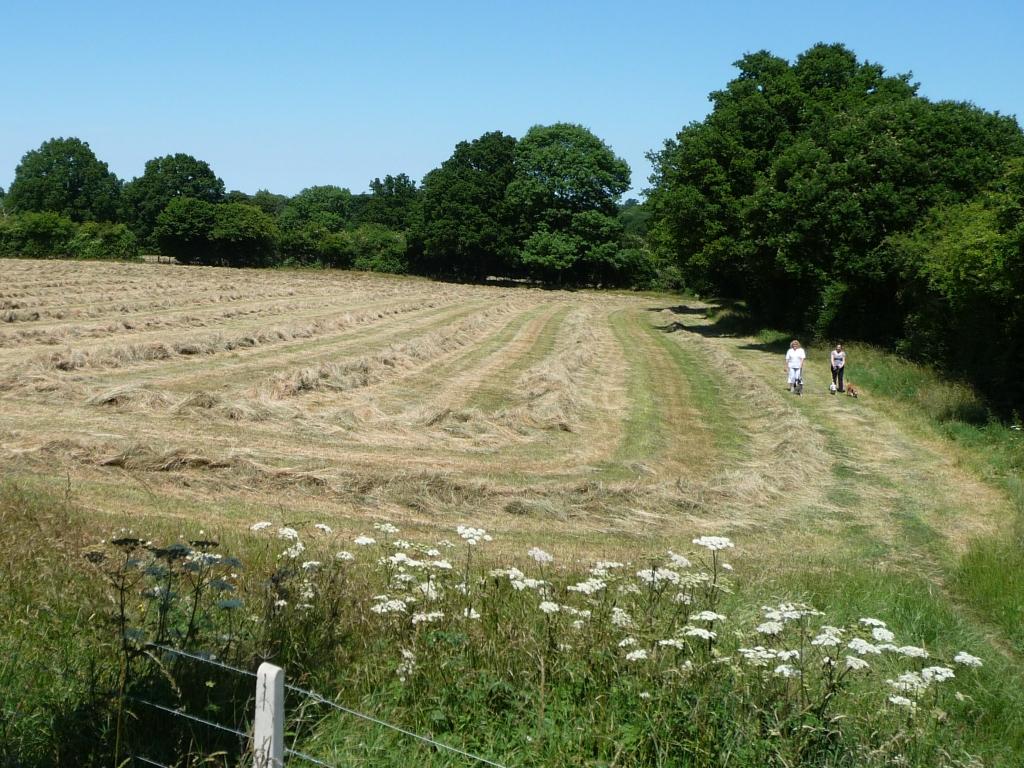

Multi-dog households are their own category within dog-friendly half term breaks uk planning. Half-term travel often means more than two adults. If you're booking alongside family or friends and between you there are three dogs of different sizes and temperaments, you need a property that can handle that arrangement. Before confirming a booking, it's worth asking:
- What is the maximum number of dogs explicitly stated, not just implied?
- Does the garden have natural divisions or separation points if dogs need space from each other?
- Is there enough indoor space that dogs can be in separate rooms if needed?
- Are nearby walks fenced or open land? That changes things significantly if recall isn't solid.
None of this makes half-term impossible with dogs. It just means asking the questions before you commit rather than after you've arrived and discovered the "large fenced garden" is a shared patio with two other cottages and a communal washing line, which is precisely the kind of surprise dog-friendly half term breaks uk planning is meant to avoid.
Secret Cottage in Wivenhoe takes two dogs with a fully fenced private garden and sits minutes from the Wivenhoe Trail along the River Colne, which connects to quieter paths away from the main visitor spots. Number 11 in Colchester also accepts two dogs with an enclosed rear garden; the Victorian terrace layout means there's enough indoor space for a group to spread out during a wet afternoon rather than all crowding the same room.
Practical Timing: How Far Ahead Do You Need to Book?
Timing is where most dog-friendly half term breaks uk plans succeed or fall apart. For half-term weeks, especially October and February, 3-4 months ahead is the realistic minimum for popular dog-friendly properties. For coastal areas in October, you're competing with everyone who knows about the beach restrictions lifting. Properties that tick multiple boxes (fenced garden, multiple dogs accepted, no pet fee, within walking distance of an off-lead area) are the ones that disappear earliest.
If you're reading this closer to the date you want, last-minute availability does exist, but it tends to be either very rural properties, those with less flexible pet policies, or locations where demand is lower. Not necessarily worse, but worth managing expectations. A dog-friendly week in rural Northumberland during February half term with two days' notice is more achievable than a Cornwall cottage with a sea view and a secure garden, and it's a fair reminder that dog-friendly half term breaks uk options exist well outside the obvious hotspots.
FAQ
Do dog-friendly cottages book out faster during half term?
Yes, noticeably. Properties with enclosed gardens and flexible pet policies are the first to go during school holiday weeks. October and February half terms in coastal regions tend to book 3-6 months in advance for the best options. Searching early, and having a short list of alternative locations in case your first choice is full, makes the process considerably less stressful.
Can dogs go on UK beaches during October half term?
In most cases, yes. The majority of UK beaches that operate summer dog restrictions (typically May through September) have lifted those restrictions by October half term. The exception is individual beaches with year-round rules or those managed by specific private landowners. Always check the specific beach rather than assuming; most councils and the National Trust publish seasonal access rules by location.
Is February half term a good time for a dog-friendly break?
For beaches and walks, February is genuinely good. Restrictions are off, beaches are quiet, and popular walking routes see fewer people. The practical challenge is shorter daylight hours, which compress the outdoor time you have each day. If you're travelling with children, plan earlier starts and look up which local attractions open in winter before you arrive.
What should I actually look for in a half-term cottage with dogs?
Start with the garden: fenced or enclosed, not just "garden access." Then confirm the maximum number of dogs, the pet fee structure, and whether the nearest walks are likely to be crowded during school holidays. Properties close to quieter routes or with private access to outdoor space tend to work better than those that require walking through busy village centres every time the dog needs a run.