Ask any farmer in Wharfedale and they'll confirm: the Dales have more sheep per square mile than almost anywhere in England, and several of those sheep are probably already on the footpath you planned to use. Which sounds like a warning. It isn't. The limestone valleys, open fells, and ancient green lanes are genuinely good walking country, the kind that rewards anyone after off-lead walks yorkshire dales visitors keep coming back for, and dogs get a lot out of a day here, once you've figured out which bits actually work.
The Dales are farmed right to the fell tops in many places. Sheep turn up in fields, on paths, halfway up ridges, and occasionally sharing your car park. Dogs are legally required to be on leads near livestock year-round, and from 1 March to 31 July there's an additional CROW Act restriction on all Open Access land. Combine those two facts with sheep-everywhere terrain and you've got a park that separates dogs who actually recall from dogs whose owners think they recall. It's also why off-lead walks yorkshire dales guidance changes so much from one valley to the next, rather than being a single blanket rule.
Even so, there are open fell sections, riverside paths, and ancient drove roads where a dog can genuinely stretch out. You just need to know which parts of the park deliver.
Table of Contents
Wharfedale: Riverside and Open Valley
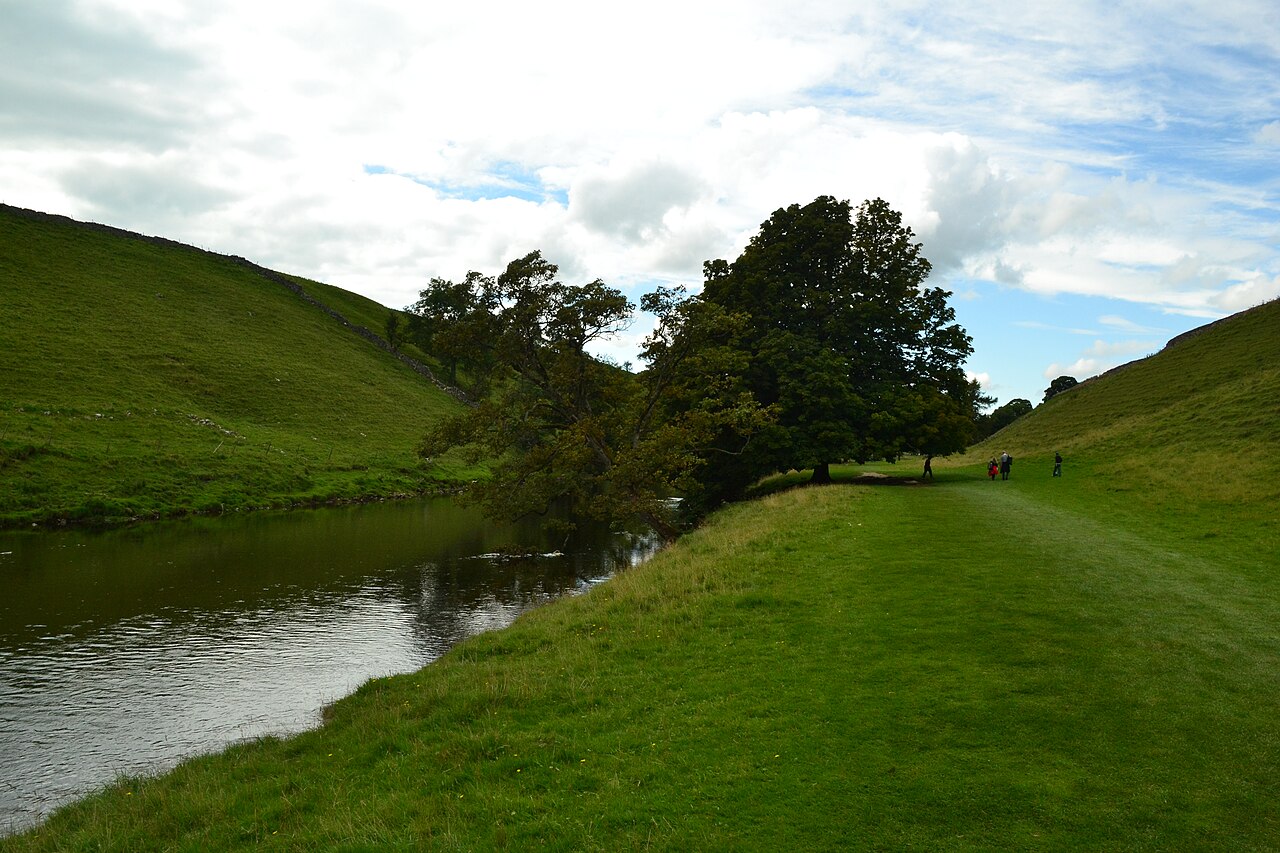

If you're coming from Leeds or the east, Wharfedale is where most people start. The River Wharfe provides a core walking route with some of the better riverside off-lead sections in the park, because drystone walls do a lot of the livestock management for you along the valley floor. It's one of the more forgiving starting points if you're new to off-lead walks yorkshire dales planning and don't yet trust your dog's recall on open fell.
Grassington to Hebden along the Dales Way
The Dales Way follows the Wharfe through this section. Between Grassington and Hebden the riverside path is one of the cleaner off-lead options in the park: walls keep sheep on their own side for stretches, and the river provides the kind of distractions most dogs rank far above any view. The return route across the tops above Grassington adds open fell walking, though livestock becomes more of a factor once you leave the valley floor. The full circuit runs about seven miles. There's a pub in Grassington that takes dogs inside rather than just tolerating them in the garden, worth building into the plan if you're timing the walk around lunch.
Trollers Gill
About a mile north of Grassington sits one of the stranger bits of the Dales: a narrow limestone gorge with walls dropping near-vertically on both sides. The ravine itself is short, but the walk in from Skyreholme and the moorland above the gill offers open ground where dogs can move freely, once you're clear of the farmland on the approach. The gill has a Norse folklore connection, specifically the Barguest, a spectral black dog that supposedly haunts it. None of the folklore changes the practical picture: this is still farmland on the approach, and the off-lead walks yorkshire dales stretch only really starts once you’re on the open moor above. Your actual dog will be completely unbothered by this legend, and more interested in whatever something left in the grass near the entrance. Either way, it's a short, satisfying detour worth folding into any off-lead walks yorkshire dales itinerary based around Grassington.
The Western Fells: Three Peaks Country
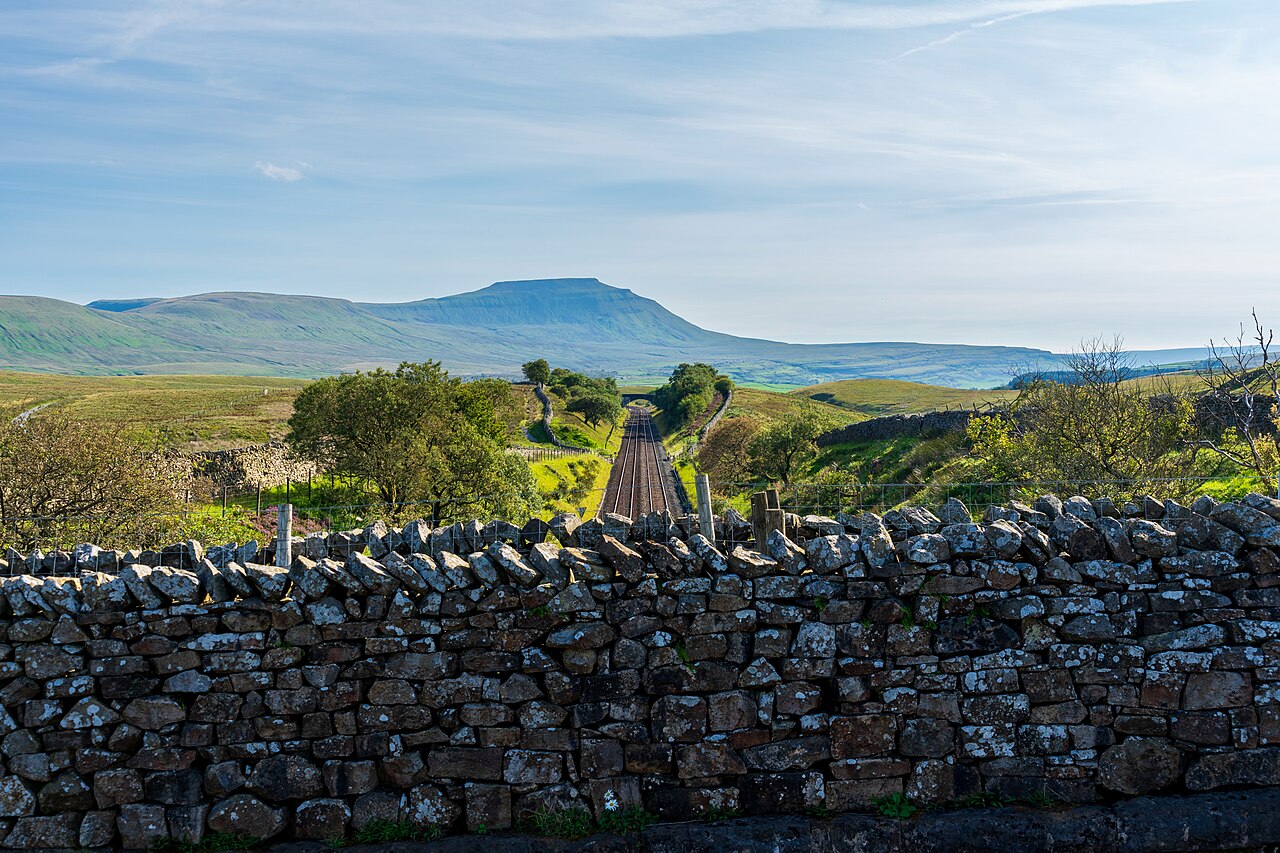
The western dales have the highest ground in the park, including the Three Peaks. For off-lead walking these routes need careful timing around both the calendar and the livestock on the lower sections. Of the western routes, Whernside and Ingleborough are the two that come up most often in off-lead walks yorkshire dales recommendations, mainly because both open out properly once you clear the enclosed farmland.
Whernside from Ribblehead
The Whernside walk starts at the base of the 24-arch Victorian viaduct carrying the Settle-Carlisle railway across the valley floor. Most dogs will need longer at the arches than any reasonable person would budget. The path follows the valley before climbing to the ridge, and sheep are present on the lower section near the farms, so the lead stays on for roughly the first mile. Above the enclosed land on the ridge, the terrain opens up and a dog who wants to cover ground can cover it. This stretch alone is often cited as one of the better off-lead walks yorkshire dales has to offer, precisely because the ridge is wide enough to give a dog real room. Ribblehead pulls a lot of walkers at weekends, Three Peaks challengers especially. If off-lead recall is borderline, a midweek morning is a meaningfully different experience.
Ingleborough from Horton-in-Ribblesdale
The Ingleborough approach via Hull Pot from Horton takes you through enclosed farmland for about half a mile before the moorland opens up. Hull Pot itself is a large natural sinkhole in the limestone, safely fenced but worth the short detour. Above the field systems the ground opens out, and off-lead walking becomes straightforward, provided your dog isn't one of those who treats distant interesting smells as urgent emergencies requiring immediate investigation.
The summit plateau of Ingleborough is genuinely one of the more useful ones for dog management: it's wide and flat, with good sight lines in all directions, which means you can actually see where your dog has got to. On narrower fell ridges you're sometimes craning for a dog who's gone fifty metres to the left and out of sight. Not here. The Clapham approach is worth considering if you want more variety on the way up, passing Ingleborough Cave and through Trow Gill, another narrow limestone gorge. Lead on through the cave section regardless of season. Even accounting for that, the Clapham route is a favourite among people planning off-lead walks yorkshire dales trips around Ingleborough specifically for the sight lines up top.
Upper Wharfedale and Langstrothdale
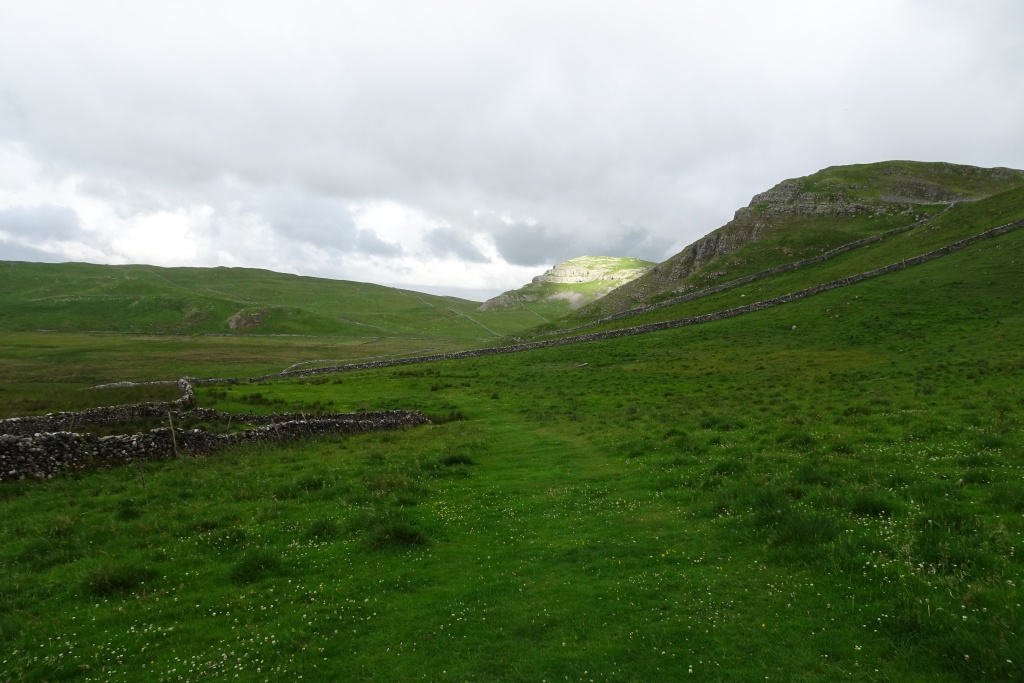

For anyone staying more than one night, the Dales Way through Langstrothdale is worth adding to the plan. This is the upper Wharfe before the valley gets properly enclosed, remote and genuinely quiet on weekdays. The river runs over limestone and the bridleway has minimal traffic. If solitude matters as much as terrain, Langstrothdale probably tops most off-lead walks yorkshire dales shortlists for exactly that reason.
The limestone country works for dogs even on the lead sections: irregular ground, varied terrain, water appearing in unexpected places through the rock. A dog who's spent four hours in that kind of landscape usually comes back to the car genuinely tired, not the performatively tired of a dog who's been marched along a canal path with nothing to sniff.
The Rules, Because They Matter Here
The CROW Act applies as it does everywhere in England: Open Access land means leads of no more than 2 metres from 1 March to 31 July. The reason, in the Dales specifically, is ground-nesting birds. The area has some of the strongest remaining curlew, lapwing, and golden plover populations in England, and the open moorland is exactly where they nest. A dog ranging across fell in late May is a genuine problem for those birds, not just an abstract concern. That's worth holding onto when you're deciding whether the lead restriction is really necessary.
Livestock rules are separate and year-round. The Dogs (Protection of Livestock) Act was updated in 2025. From early 2026, worrying livestock no longer requires physical contact: chasing, running at, or causing fear to sheep is an offence, and the fines aren't nominal any more. Whether or not a farmer is watching, it's worth acting as though they are. None of this rules out off-lead walks yorkshire dales entirely, it just narrows the reliable windows considerably.
One area to note specifically: the boardwalk at Malham Tarn National Nature Reserve is assistance dogs only, full stop. Not a seasonal restriction, just a permanent one. Plan around it if you're in that part of the park.
So practically speaking: August to late February is the window for off-lead fell walking in the Dales. March to July, the riverside paths and enclosed woodland sections where the CROW restriction doesn't apply and livestock isn't a factor are your realistic options.
A Quick Reference for Off-Lead Walks Yorkshire Dales Routes
Reliable off-lead options (August to late February on Open Access; riverside routes year-round where livestock is absent):
- Grassington to Hebden riverside (Dales Way)
- Trollers Gill approach and moorland above
- Whernside ridge above enclosed farmland (Ribblehead start)
- Ingleborough summit plateau (Horton approach, above field systems)
- Langstrothdale (Dales Way upper valley, quieter weekdays)
Leads required:
- All Open Access moorland, 1 March to 31 July
- Any field or path with livestock present, year-round
- Malham Tarn NNR boardwalk (assistance dogs only, permanent)
Planning Your Stay
Thinking about where to stay: Grassington is the natural base if Wharfedale is the main draw. If you're there primarily for the Three Peaks routes, Horton-in-Ribblesdale or somewhere near Ribblehead makes more sense. Hawes in Wensleydale puts you in the middle of the park if you want flexibility to walk in different directions each day without too much driving. Wherever you base yourself, proximity to a genuine off-lead walks yorkshire dales route is worth weighing as heavily as the cottage itself.
Properties on BowWowsWelcome carry a BowWow Score that covers the practicalities worth knowing before booking: fenced gardens, how close the property actually is to off-lead routes, and whether dogs are genuinely expected or just permitted while the owners cross their fingers about the carpets. Browse dog-friendly cottages in Yorkshire to find places close to these routes.
After the walk, our guide to dog-friendly pubs in Yorkshire covers where a wet spaniel is actually welcome rather than merely not turned away at the door.
FAQ
When can my dog actually be off-lead in the Yorkshire Dales?
Realistically, August to late February for the open fell. From 1 March to 31 July the CROW Act limits dogs to a lead of no more than two metres on Open Access land, which covers most of the high ground here, and the reason is the curlew, lapwing and golden plover nesting out on the moor. Between March and July your reliable options are the riverside paths and the enclosed woodland sections, where the restriction does not apply and livestock is not a factor.
Which routes give a dog the most room to run?
The Ingleborough summit plateau is the standout, because it is wide and flat with good sight lines in every direction, so you can see where your dog has got to rather than craning after one who has drifted fifty metres out of view. The Whernside ridge from Ribblehead opens up properly once you are above the enclosed farmland, which is roughly the first mile with the lead on, and the Grassington to Hebden riverside stretch is the gentler option if you are still working out how far your dog’s recall really goes.
What happens if there are sheep on the path?
The lead goes on, every month of the year, because livestock rules sit separately from the CROW Act restriction. The Dogs (Protection of Livestock) Act was updated in 2025, and from early 2026 worrying livestock no longer requires any physical contact, so chasing, running at, or frightening sheep is an offence in itself and the fines are no longer nominal. Sheep here turn up in fields, on paths, halfway up ridges and occasionally in the car park, so it is worth walking as though a farmer is always watching.
Is there anywhere dogs cannot go at all?
The boardwalk at Malham Tarn National Nature Reserve is assistance dogs only, and that one is permanent rather than seasonal, so it is worth planning around if you are heading for that part of the park.