Dog friendly beaches Isle of Wight visitors can rely on all year need a little homework before you pack the lead, because a Public Space Protection Order keeps dogs off specific stretches of 11 named beaches between 1 May and 30 September 2026, while the island's council separately lists 14 beaches where a dog can walk all year round. The restrictions touch Colwell, Cowes, East Cowes, Freshwater Bay, Gurnard, Sandown, Shanklin, Springvale, Ventnor, Yaverland and Ryde, which covers a good share of the island's best-known sand, so the beaches below are the ones to build a summer dog holiday around, and in winter you can relax because dogs are allowed on all of them.
Table of Contents
Dog Friendly Beaches Isle of Wight: How the Summer Rules Work
The order applies to specific areas of each beach rather than the whole shoreline, and that detail catches people out more than the dates do. At Colwell Bay, for example, the restriction applies west of the slipway while the beach to the east welcomes dogs all year, and at Totland the council states there are no seasonal exclusion zones at all, so two beaches a short drive apart can follow completely different rules for the same dog on the same afternoon.
The council has said in earlier notices that the penalty is a £100 fixed penalty, or up to £1,000 if the case is prosecuted in court, and signs are posted at the affected beaches along with maps on the council website, which are worth checking on the morning you travel. The Visit Isle of Wight dog walking guide confirms the same pattern, with exclusion zones from 1 May to 30 September and dogs allowed on every beach in winter.
Beaches such as Yaverland appear on both sides of the picture, since part of the beach falls inside the restrictions and part does not, so treat any single-line verdict on a beach, including ours, as a prompt to look at the signs when you arrive. We rate places on how well they understand dogs through the BowWow Score, and the same instinct applies to beaches: the welcome is in the detail.
Wide Sand for a Proper Run
Yaverland
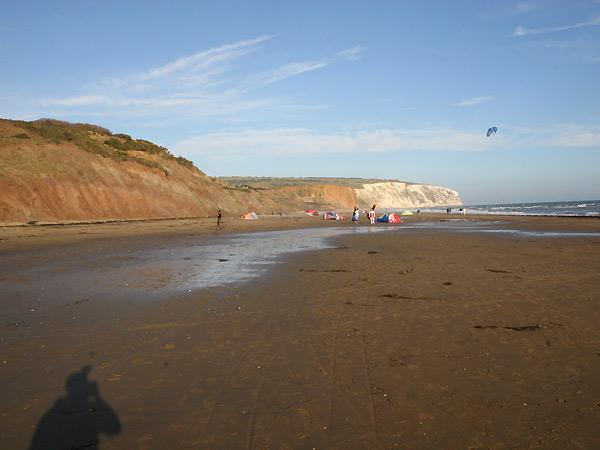
Yaverland is the beach people mean when they say the island has big open sands, with wide, flat ground at low tide, good visibility so you can see your dog coming back, and easy access from the car park. The council lists the stretch outside the summer restrictions as open to dogs all year, and Visit Isle of Wight describes dogs as welcome all year round, which is why it appears on both lists above and why a glance at the signs is sensible in July.
There is a beach cafe at the southern end, though the Visit Isle of Wight guide advises checking its winter opening, and the usual cliff warning applies: never walk directly under the cliff line, because falls happen.
Ryde and Appley
Ryde is open to dogs west of the pier and Appley is open east of Appley Tower, which gives you a long run of seafront that works across the seasons. Dogs must be on leads on the public roads here, including Appley Walk and Garden Walk, so keep a lead in your pocket for the stretches between sand and car, even if your spaniel considers the pavement a personal insult.
Seagrove
Seagrove is a more qualified entry, because only the quieter outer sections are described as dog friendly all year, but those sections have long stretches of sand at low tide and a more peaceful feel than the central part of the beach. It suits a dog that wants space more than an audience.
Sheltered Bays and Woodland Paths
Whitecliff Bay
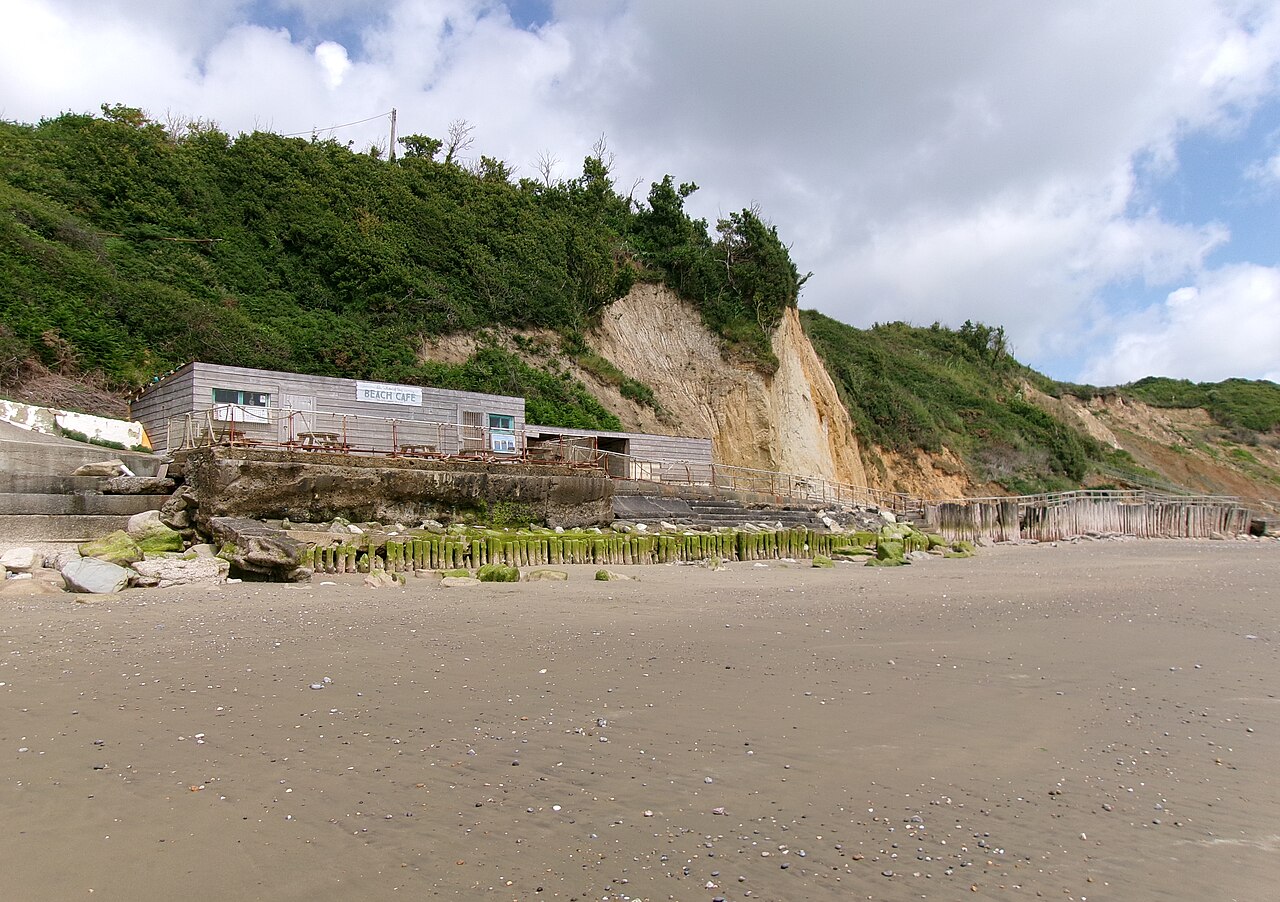
Whitecliff Bay is a curved, sheltered beach with soft cliffs and woodland behind it, and sand appears as the tide drops. The council describes it as relaxed away from the caravan park, so walk along from the busier end and you will find the quieter sand where dogs can mooch about without dodging deckchairs. Unlike the open sweep at Yaverland, this one rewards a slow wander more than a flat-out sprint.
Priory Bay
Priory Bay is secluded and reached on foot through woodland paths, which already tells you it is not a beach for a quick drive-up. The walk in does half the job of tiring a dog out, and the sand at low tide feels properly remote, the kind of place where a Labrador's only competition is a seagull.
Bembridge
Bembridge is pebbly rather than sandy, with small boats pulled up and rockpools to poke at, and it is calm enough that it suits dogs who like gentle exploring over charging into surf. It is the sort of beach where a nose-down terrier can lose forty minutes without any help from you.
Chilton Chine
Chilton Chine is a hidden beach reached by woodland paths, with a mix of sand and shingle and very few people, and the council suggests it suits off-lead dogs with good recall. That caveat matters, since a hidden beach down a woodland path is a poor place to discover that your dog's recall only works when she is bored.
Quiet, Rugged and Fossil-Strewn

Compton to Brook
The long stretch of coast from Compton towards Brook is rugged, full of rockpools and, according to Visit Isle of Wight, dinosaur footprints, and dogs can run free at low tide all year round. The National Trust van in the Compton Bay car park serves refreshments, and the suggested route is to walk to Brook and come back along the coastal path via Hanover for a circular loop. Compton Bay itself is not named in the council's list of restricted beaches, but one holiday site reports a seasonal dog ban west of the Compton Bay car park, so check the signs before you let the lead go.
Brook Bay
If you are already walking the Compton route, Brook Bay is where it ends, and it is quieter and more rugged than Compton, mostly shingle with some sand and well known for fossil hunting. Dogs and fossils make a mixed pairing, since every interesting lump of rock is also a potential snack, so keep an eye on what is going into mouths.
Atherfield Bay
Atherfield Bay is remote and mainly shingle, framed by cliffs and farmland, and the council pitches it at confident walkers. With farmland behind the cliffs it is sensible to keep a lead handy, and the remoteness cuts both ways, since there is nobody around to help if a dog gets itself into trouble on the shingle.
Rocken End
Rocken End is remote, rocky and shingle-covered, and best suited to experienced walkers, so it is not the beach for a first-timer or a small dog in a hurry. It is worth knowing about mostly for the owner who wants somewhere with almost nobody on it.
Small Coves and Calm Shingle
Steephill Cove
Steephill Cove is a small cove with pebbles and fishing boats, reached by a steep footpath, which makes it better for well-controlled dogs than for the excitable sort who treat every slope as a slide. Visit Isle of Wight suggests walking down through Ventnor Park and Flowersbrook and returning along the coastal path to Ventnor Promenade, a route that makes the cove part of a proper walk rather than a one-stop visit.
Bonchurch
Bonchurch is mainly shingle and calm, described as suitable for peaceful walks throughout the year. It is a good one for older dogs who have earned a flat, quiet stroll.
Totland
Totland has shingle and sand at low tide, and it is quieter than the resort beaches, with no seasonal exclusion zones, which makes it one of the safest bets for a summer holiday when you do not want to study maps.
Colwell Bay (east of the slipway)
Remember the split here: the west of the slipway is restricted in summer and the east is open all year, with quieter sections away from the promenade. If you only remember one rule from this page, make it this one, because a slipway is an easy line to cross by accident with a dog pulling you towards a sandwich.
Beyond the Sand
Beaches are only half of an island dog holiday, and some of the best ground sits just inland or on the headlands, which is useful on days when the tide is wrong.
The National Trust's St Helens Duver packs beach, rock pools, dunes and coastal woodland into a compact area, and because Hebridean sheep graze there, dogs are welcomed on leads. Culver Down gives views over Bembridge, Sandown and Shanklin Bay, with cows and cliff edges to be careful of, and the Culver Haven Inn sits at the summit for a stop.
For a longer walk, the Tapnell Trail is a mostly flat 6-mile loop in the West Wight that can be started at any point, with refreshments at The Cow, which serves doggy ice cream from Rex's Range. The River Yar route from Freshwater to Yarmouth follows a former railway line and ends near Off The Rails in Yarmouth, which has its own dog menu.
If your dog needs a fully enclosed space, Country Dogs Paddock Hire in Brading offers a 1.5-acre enclosed paddock for off-lead running, and booking in advance is essential. That is a handy backup for a dog with questionable recall, and the occasional cat or rabbit owner travelling with a pet that is not a beach fan will appreciate a calmer garden-style option too.
Where to Stay with Your Dog on the Island
We do not have a property listed on the Isle of Wight on BowWowsWelcome yet, and we would rather say so than pad this section. If you run a pet-friendly place on the island, you can list your property and have it scored on the same BowWow Score as everything else, covering the fenced garden, the pet fee, size limits and how many dogs you can bring.
When you are comparing places in the meantime, look for a fenced garden, a pet fee that is stated plainly, and clear rules on how many dogs are allowed, because the beach is only part of the day and the cottage is where the muddy paws end up, and the best dog friendly beaches Isle of Wight offers are wasted if the place you sleep resents a wet dog. Our guide to dog-friendly beaches in Dorset you can visit year round works the same way for the mainland coast, and the best dog-friendly beaches in the UK roundup is the place to compare regions.
FAQ
Are dogs allowed on Isle of Wight beaches in summer?
Yes on many of them, but not everywhere: a Public Space Protection Order keeps dogs off specific areas of beaches at Colwell, Cowes, East Cowes, Freshwater Bay, Gurnard, Sandown, Shanklin, Springvale, Ventnor, Yaverland and Ryde from 1 May to 30 September. The council lists 14 beaches, including Totland, Brook Bay and Steephill Cove, where dogs can still walk through the summer.
Which Isle of Wight beaches allow dogs all year round?
The council's list covers parts of Yaverland, Ryde, Appley, Seagrove and Colwell Bay, and the whole of beaches such as Whitecliff Bay, Priory Bay, Bembridge, Chilton Chine, Totland, Atherfield Bay, Brook Bay, Rocken End, Steephill Cove and Bonchurch. In winter, dogs are allowed on all island beaches.
What is the fine for taking a dog to a restricted beach?
The council has stated a £100 fixed penalty for anyone caught with a dog in a restricted area, or up to £1,000 if prosecuted in court. Check the council's maps and the signs on the day, since boundaries cover specific areas rather than whole beaches.
Can dogs run off the lead on the Isle of Wight?
It depends on the spot: Chilton Chine is suggested for off-lead dogs with good recall, dogs can run free at low tide between Compton and Brook, and Country Dogs Paddock Hire offers an enclosed paddock. Dogs must be on leads on public roads at Appley and are welcomed on leads at St Helens Duver because of the grazing sheep.