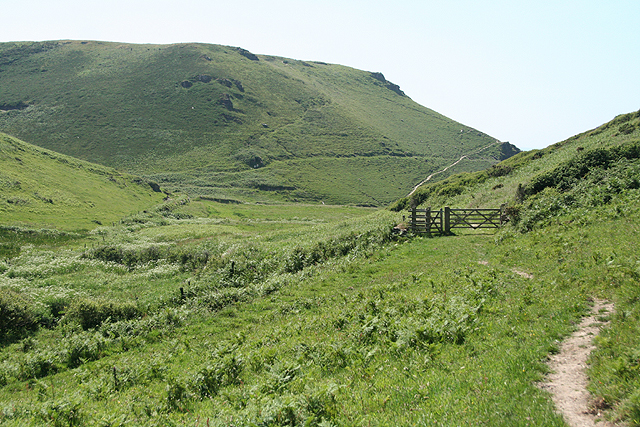
Can you take dogs on the South West Coast Path? Yes, with all 630 miles of the route open to dogs at every time of year, from Minehead in Somerset to Poole in Dorset, with no blanket bans, no restricted sections, and no rules about breed or size. What does exist in 2026 is a short list of requirements that apply at specific points along the route, and a seasonal lead restriction on open access land that catches most people out because it isn't specific to this path at all — it applies across all of England.
Table of Contents
What the Rules Are for Dogs on the Path


The governing principle is simple: dogs can walk every section so long as they don't disturb livestock, wildlife, or other walkers. In practice, that means three things.
Around sheep, cows, and horses, put your dog on a short lead. There's a fair amount of coastal grazing along the route, particularly in Somerset, North Devon, and parts of the Lizard Peninsula in Cornwall, and an off-lead dog in a field of livestock near a cliff edge is a dog creating a situation that ends badly for someone. It's a rule that earns its place.
Keep dogs back from cliff edges, which the South West Coast Path has an extraordinary amount of, with more total ascent than climbing Everest three times over and some sections where the drops are severe and unfenced. Dogs don't reliably assess vertical drops, especially when something interesting appears at the edge, and the combination of an excited dog and an exposed clifftop is the kind of thing you only need to experience once to take seriously.
Pick up after your dog on the path and on the beaches the route crosses, and don't let your dog charge at other walkers uninvited; some of them are managing their own dogs on leads and don't need the added complication.
The Ground-Nesting Bird Season: 1 March to 31 July
This is the rule that catches the most walkers out. Between 1 March and 31 July there is a legal requirement to keep dogs on a lead no longer than 2 metres on all open access land in England, covering a significant stretch of the South West Coast Path where the route crosses coastal heathland and clifftop that qualifies as open access.
The restriction exists to protect ground-nesting birds: species like lapwings, stonechats, and skylarks that build nests directly on the ground during spring and early summer, as the Wildlife Trusts explain. An off-lead dog running through coastal heathland during that window can destroy nests and disturb brooding birds without the walker ever knowing it happened. The requirement is 2 metres maximum lead length, not a tight heel lead; the point is keeping the dog from ranging across open ground, not from walking beside you.
The sections of path most likely to involve this restriction are the Lizard heathland in Cornwall, parts of the Purbeck coast in Dorset, and stretches where the path crosses National Trust and Natural England managed land with heath and rough grassland. Sections through woodlands, estuaries, and seafront promenades don't carry it.
If you're walking in spring and off-lead time matters to your dog, building your route around sheltered valleys, estuary edges, and woodland sections rather than open heathland avoids most of the restriction without sacrificing any of the scenery.
Summer Beach Bans: How They Work in Practice
Some beaches along the route impose seasonal dog bans during summer, typically between Easter and October, covering the managed beaches with lifeguards and facilities. Where the Coast Path crosses one of these beaches, there is always an alternative crossing point along the back of the beach above the high tide mark, so the ban doesn't stop you progressing along the route; it means your dog crosses at the top edge rather than the waterline, on a lead, without lingering.
On the quieter, more remote beaches — and there are many of them along the 296 miles of Cornish coastline the path covers — dogs are welcome year-round, even at peak summer. These tend to be the beaches without any facilities at all, the ones where the path dips down to a cove and climbs straight back out, and they're often the most satisfying ones to find.
For Cornwall's beaches specifically, the best dog-friendly beaches in Cornwall guide covers which ones are open year-round and which apply seasonal restrictions.
Specific Dog Walks Worth Knowing
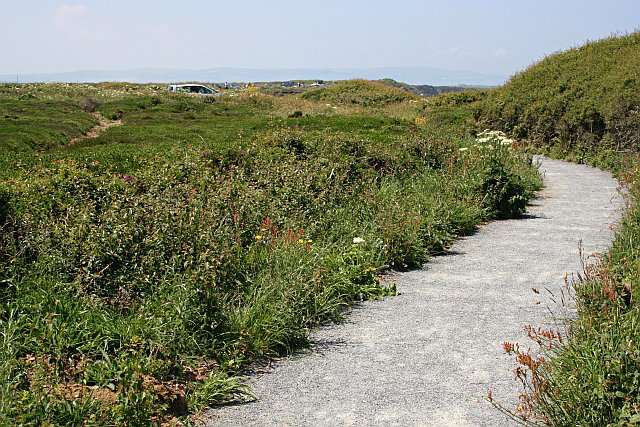
The South West Coast Path National Trail lists 68 curated dog-friendly walks across the route, selected because each includes a dog-welcoming beach, a pub that takes dogs, or enough open space for dogs to have a proper run. They span three difficulty levels. A few worth picking out by location and distance:
Roundham Head, Devon is 0.9 miles (1.4 km), the shortest walk on the curated list and a useful option if you're staying nearby with a dog that's past its long-walk days, or with a puppy you're building fitness in gradually. Short, but the headland is properly coastal.
Penzance to Marazion, Cornwall covers 2.7 miles (4.3 km) of seafront walking with St Michael's Mount across the water the whole way. The sand at Marazion is worth checking seasonal rules on before you arrive, but the seafront stretch itself is accessible and flat by the standards of a path that is otherwise anything but.
Baggy Point Short Walk, North Devon is 2.8 miles (4.5 km) with beach access, the kind of North Devon headland walk that gives dogs the wind they were made for, with enough open ground on the point itself that a well-recalled dog can cover some serious ground.
Mullion Cove to Lizard Point, Cornwall is 6.9 miles (11.1 km) of clifftop walking across the Lizard Peninsula, one of the most dramatic stretches of the path, and specifically flagged on the official listing as "particularly good for dogs" because it passes beaches and pubs where dogs are welcome. If you're going to do one longer section of the path with your dog this is the one that has everything in the right combination.
Appledore and Northam Burrows, North Devon is 6.8 miles (10.9 km) through the Taw-Torridge Estuary and the dunes of Northam Burrows Country Park, which offers some of the most generous off-lead space in North Devon outside summer peak.
For Cornwall walks where dogs can run free year-round rather than only outside the beach ban season, off-lead walks in Cornwall covers the routes worth planning around.
Planning a Stay Around the Path
The path runs through some of the most dog-friendly accommodation territory in England, which makes base-camp walking — staying in one place and day-walking different sections — more practical here than on most long-distance routes. Cornwall's north and south coasts both give you a different stretch of path each morning without moving accommodation, and dog-friendly holidays in Cornwall includes properties in range of the path on both coasts.
For multi-day linear walking, some walking holiday companies offer dog-friendly tours with luggage transfer along specific sections, which removes the weight problem for longer stages. The Penzance to Falmouth section covers 61 miles over four or five days and is one of the more popular dog-friendly touring routes. Ask about the dog policy at the point of booking, not on arrival.
The dog-friendly pubs in Cornwall guide is worth having open alongside the route planner; a coastal walk that ends at a pub where your dog is welcome inside, not merely tolerated in the garden, is a materially different experience.
The BowWow Score on property listings reflects the practical details that matter at the end of a coast path day: whether there's somewhere to rinse muddy paws, space for wet kit, and how the property handles more than one dog.
FAQ
Can you take dogs on the South West Coast Path?
Yes. Dogs are permitted on all 630 miles of the route, with no sections that exclude dogs outright. Summer beach crossings may require using the back-of-beach alternative, and open access land carries a legal lead requirement between 1 March and 31 July, but neither restricts access to the path itself.
Do dogs need to be on leads the entire time?
Not the entire route. A lead is required in three situations: around livestock, near cliff edges where the risk is serious, and on open access land between 1 March and 31 July to protect ground-nesting birds. The rest of the route is at the owner's discretion, with the expectation that dogs stay under control around other walkers throughout.
Can a dog walk all 630 miles of the South West Coast Path?
Dogs have done the full route, though the 115,000 feet of total ascent and multi-week timescale make it a serious undertaking for both dog and owner. The main considerations are daily mileage appropriate for the dog's age and condition, finding dog-friendly accommodation along the entire length, and managing the seasonal lead requirements during spring. Most people walk sections over multiple trips rather than end-to-end.
What are the best sections for dogs?
The Lizard Peninsula in Cornwall, north Cornwall between Bude and Padstow, and North Devon around Baggy Point and Braunton Burrows are frequently recommended for the combination of off-lead space and dog-welcoming pubs and beaches. The Purbeck coast in Dorset has dramatic clifftop walking but stricter seasonal heathland restrictions. The Somerset section around Exmoor is beautiful and tends to be quieter, though livestock crossings are more frequent.